Seven scenarios for the future
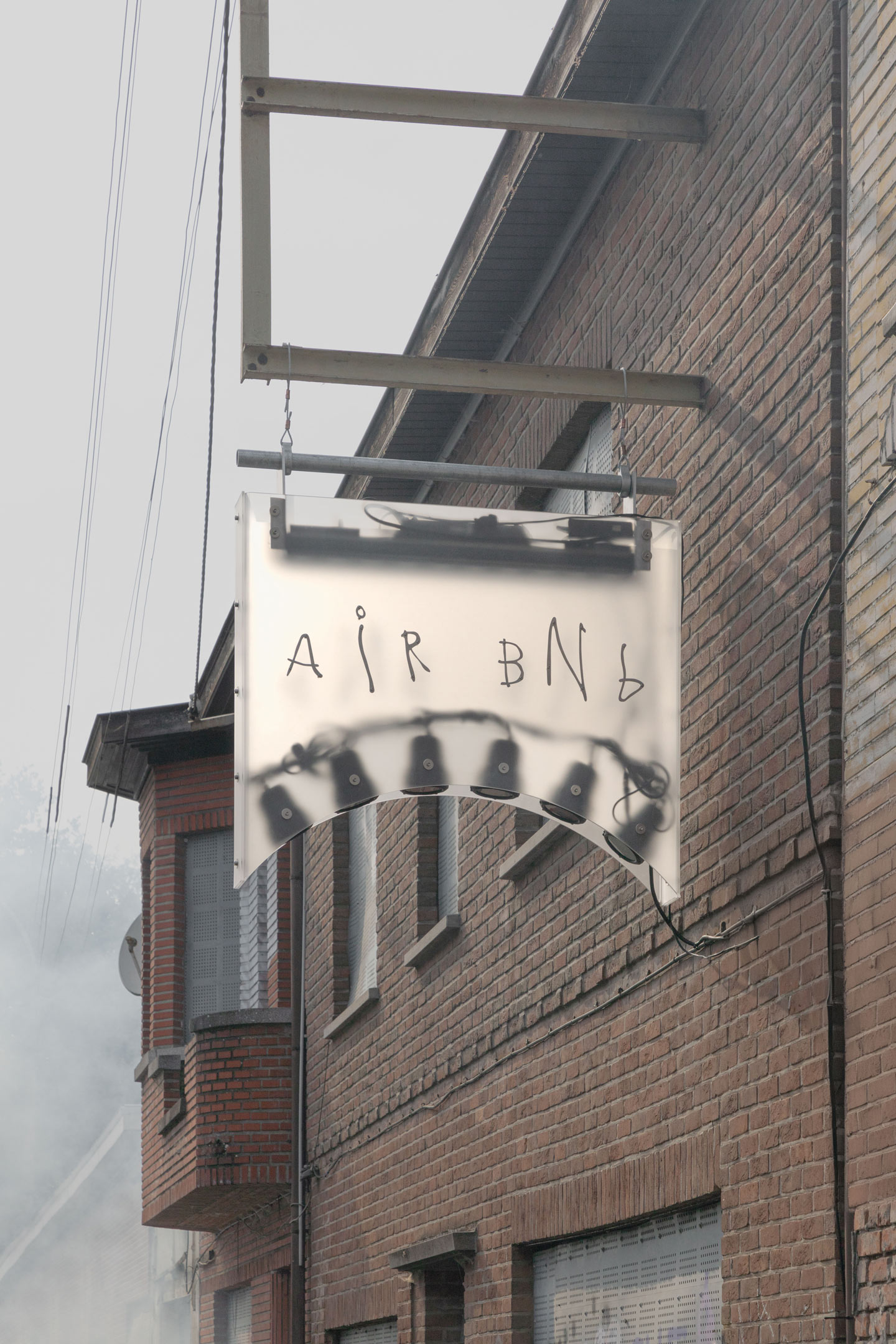
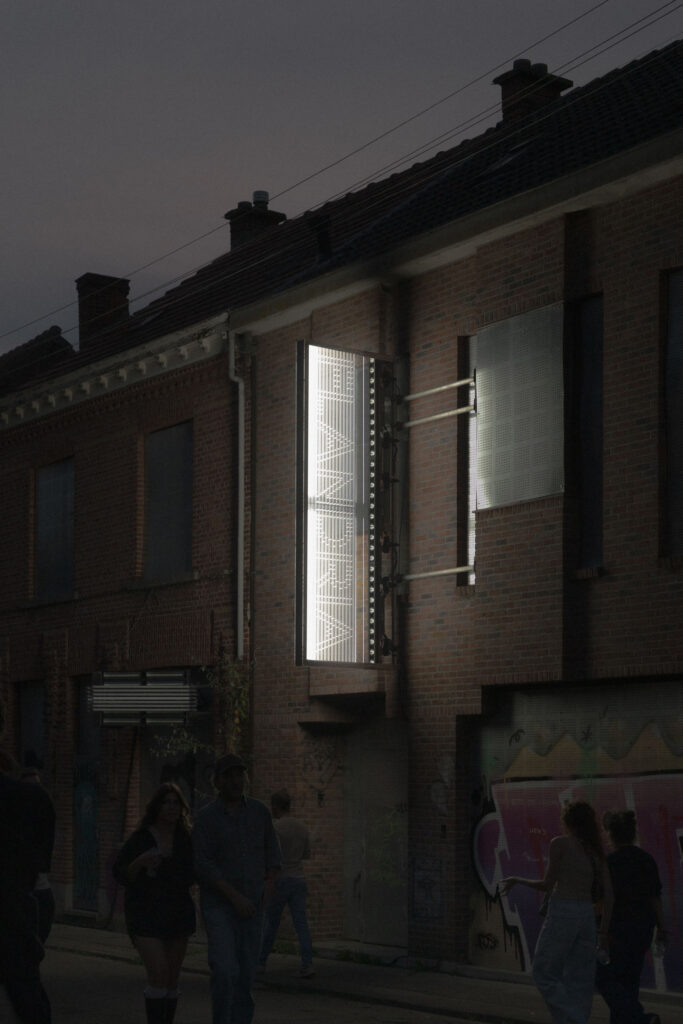
The Pastorij is lit up by a series of storefront signs suggesting different scenarios for a future Doel.
Today’s undefined village centre, with Pastorijstraat as its axis, was once the beacon of vibrant commerce, hospitality, tourism and recreation in the polders of the Waasland region. The seven lighting designs explore different future perspectives that could contribute to the revival of the village.
Een Doel
Een Doel aims to provide a realistic view of what could emerge in Doel, taking into account its history, current context and possibilities for growth. Central to this is the dialogue held with (former) residents, action groups, researchers, architects and authorities, among others. The proposals focus on several key pillars that can facilitate the revival of a unique village like Doel. Rather than focusing on a singular vision or direction, it aims to recognize a variety of possibilities.
Attached to each facade hangs a story of hope ready to be told to a new generation. In turn this generation will contribute to the future of Doel, helping it to slowly but steadily evolve into a fully-fledged village that inevitably will bring about the end of Doel Festival. Doel Festival exists so that one day it no longer needs to exist.
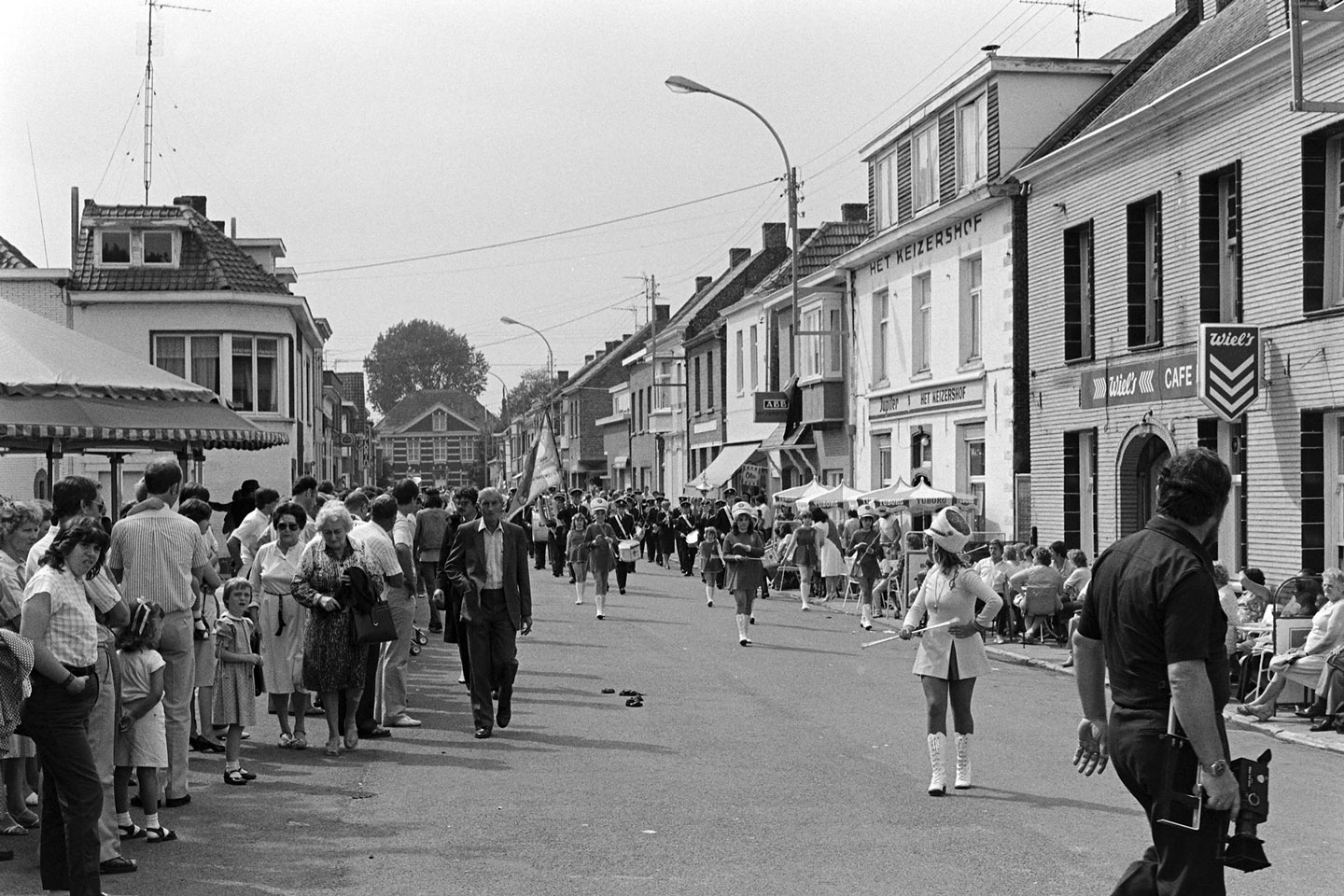
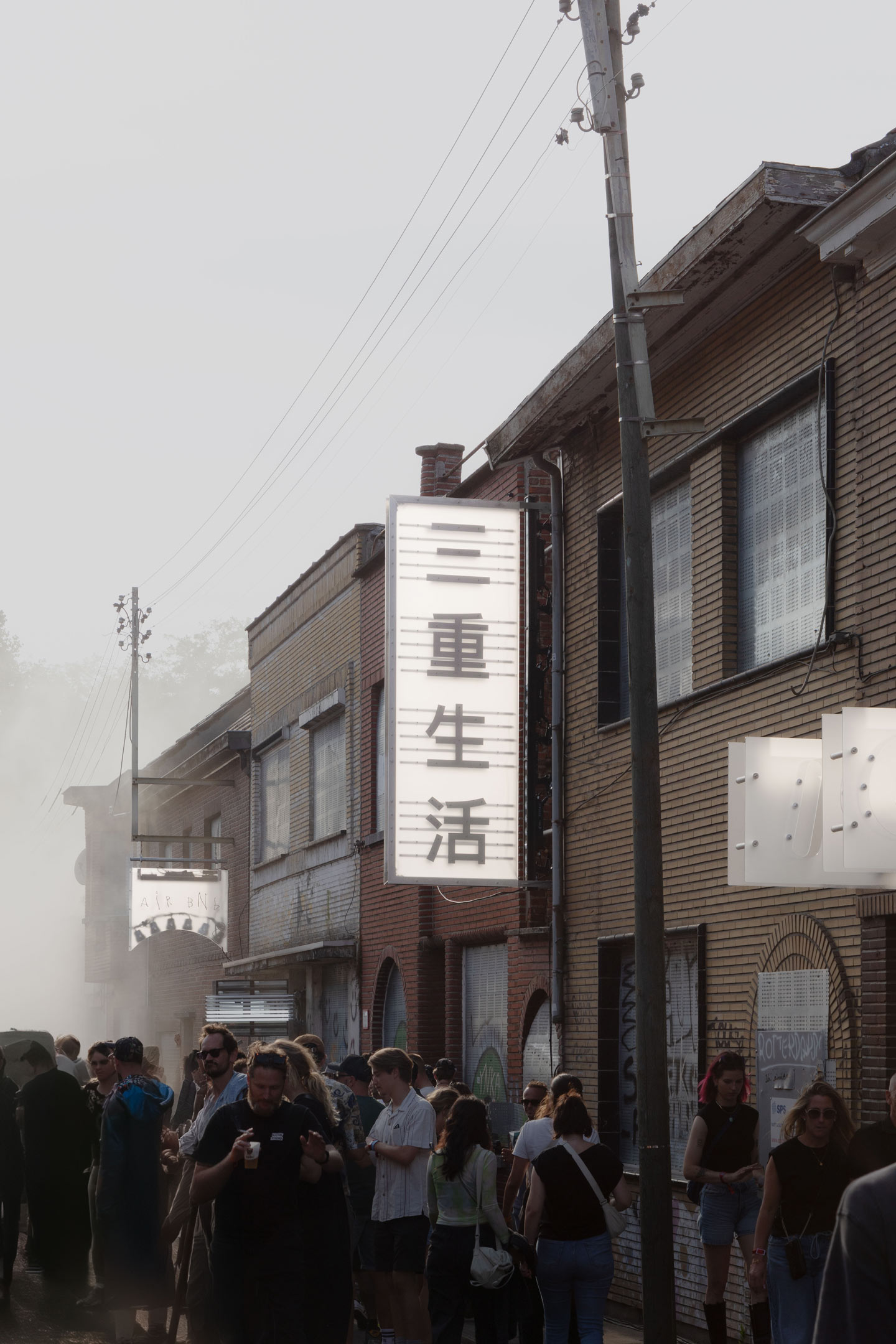
The contrast could not be bigger with lit-up metropolises like Tokyo or New York with their excessive presence of illuminated signs directing you to the most vibrant streets. This duality is underlined in a scenography that leaves one side of the street untouched, exposing the paralysing emptiness of the current situation.
For sale
Three coloured surfaces, six characters. ‘te koop’ is probably the most visualised sign in the Belgian streetscape. Symbol of the power of capitalism, it promises a bright future for potential buyers. An ideal image with a bitter aftertaste in a village where former residents were forced to move out in order to make way for expansion of Antwerp’s port in Doel.
After a lengthy judicial battle the proposed expansion has been abandoned resulting in a significant vacancy rate in Doel. Due to this various studies and activist groups are pleading in favour of adopting a form of Slow Urbanism, in which architectural master plans are left behind freeing up space for small scale projects to steadily grow and contribute to the revaluation of the ‘te koop’ sign. It is important that Doel remains first and foremost a residential community. Recently, the retrocession right* was approved which allows former owners to buy back their homes.

Artists-In-Residence
A key group that can make the liveability of redevelopment zones in cities flourish, is artists. Young creatives can contribute to shaping a new vision for Doel in which past, present and future merge in exchange for a free space for experimentation. Open space is rare in urban space. Through artist-in-residencies, Doel can provide a place where artists temporarily move in to work on creative projects and live there as part of the community.
“If Doel revives, it will be with a new generation.”
–former resident Cécile De Wael
In a village where the art scene has always played an important role, the current residents warmly welcome creatives. In the past, many artists came to Doel to work. The surroundings offered a variety of subjects: the cloudy sky over the polders, farmers on the fields, fishing boats on the Scheldt. Some resided there for longer periods of time, among them Richard Baseleer and Albert Servaes. Temporary habitation could allow work-related stays, but could also take on a tourist angle, from a campsite to B&Bs or a real village hotel, in the tradition of Doel as a place for recreation.
Gentrification
This upgrading also has its downside. Artists are often the forerunners in gentrification processes. The arrival of the creative class can upgrade a neglected village like Doel and increase the financial value of houses, eventually forcing less affluent residents to move out.
In the early 20th century, the Chinese community in San Francisco developed a unique aesthetic for their living environment to cope with discriminatory laws and expropriation. A theme park version of Chinatown was designed specifically to attract tourists. A distinctive architectural style—combining exaggerated traditional Chinese elements like pagodas with Western influences—was employed to promote the district as an exotic and safe destination. A built-in feature that protected their living areas from gentrification in cities all over the world.
What if we exaggerated Doel’s unique character to preserve it? The omnipresent graffiti in the village could be used as a starting point for this. The anarchic character of Doel is highlighted by an art form that has its roots in the politically and culturally uncertain climate of the 1980s. A Doel full of visual impulses, an open space where you can read history on the facades of the buildings.
Tourist information point
Thanks to its uniqueness Doel has always had a strong tourism flow, both in the past as a recreational waterfront village and today as an attraction for curious wanderers, hikers and cyclists. Currently, the village mainly exercises a kind of theme park function, without any economic benefit for its residents. To put Doel back on the map as an attractive destination, a dynamic village life is crucial, but this also requires a clear vision.
Widespread and instantly recognised, the i-pictogram indicates where to find tourist information points. Clear and straightforward, a guide for every tourist feeling lost at a new destination. For years, there hasn’t been a clear destination for Doel. A tourist info point forces an environment to think about the direction it wants to go and what values will be on display: what does Doel want to be? What story does the village want to tell?
“At the core of Doel’s 17th century village there should be room for artists, as-
sociations and recreation. However, it’s everything but our intention to turn Doel
into a second Bokrijk.”
–Maarten Goris, environment expert Flemish Government

Flandria
Flandria played an important role in the flow of tourists. In the 1920s, the ferry service originated when the boat that transported potatoes from Doel to Antwerp started allowing people who wanted to visit Doel to board on its return trip. Gradually, as the idea of taking a stroll on Doel’s boardwalk grew in popularity, so did the usage of the Flandria to get there.
Today, the ferry to Doel no longer sails. On the sign, only the outline of letters remain visible. Yet a full restoration of Doel’s jetty is in the works and as of summer 2026, Doel’s ferry service will be reinstalled. The importance of a gateway to a city is unmatched.
Doel Festival
Doel Festival aims to revive the rich celebration culture that throughout history has always been present in this village, ranging from community events and annual markets to carnivals and processions. To this day, the Doelse Feesten and Scheldewijding still take place in the Polder village. The Scheldewijding festivities were initiated in the 1970s to emphasise the village’s resilience.
Doel Festival aims to contribute to a positive image for the village and help put it back on the map. The festival wants to emphasise that Doel is not an abandoned village and that there is a community-driven future to be created in a place that currently seems lost. This year, the festival brings a programme that proposes a reinterpretation of a village festival, the ‘braderie’.— It is about the overall experience of a village visit, where the musical lineup is just as important as the food court or the art experience.

De Sportvriend
Social cohesion is important for the functioning of a society. Bringing different people together reinforces the community feeling. Sport has a strong connecting factor, both on and off the field. It also functions as the mirror of society; any emotions or sins we carry with us are reflected in sport.
Sports associations often persist in villages or towns where there is unrest, acting as the glue that tries to hold the community together. Until 2016, FC New Saeftinghe played competition on the Doel football field, as the last remaining original association while other clubs and most residents had long since left.
The pub culture in the polder village also had an important social function. The Sportvriend served as a meeting place for various clubs such as the Duivenbond and the Knalclub, as well as for the employees of the nuclear power plant. Resilience prevailed there too, the last café Doel 5 kept its doors open until 2023.


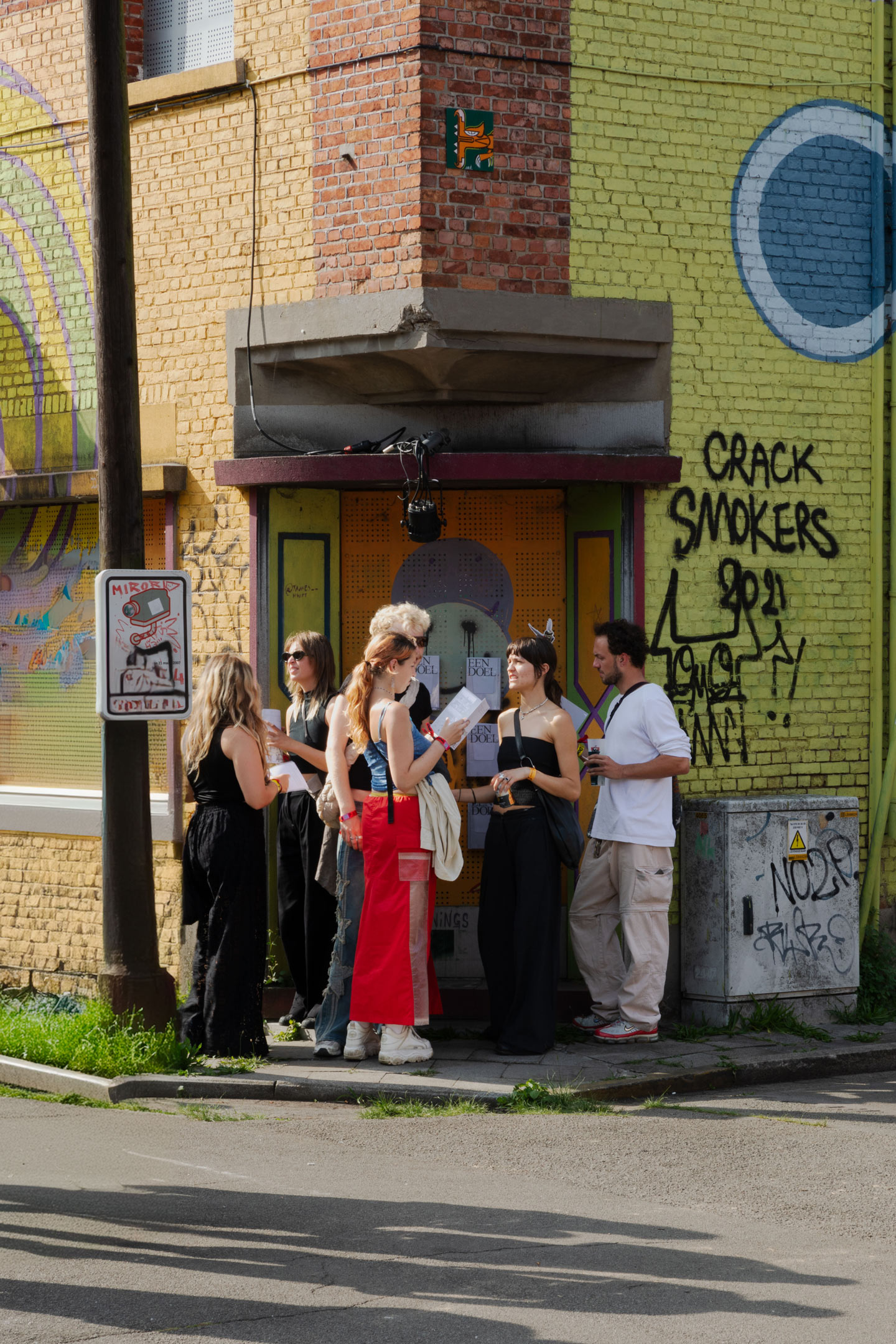
A printed publication of Een Doel was available for free at the festival underneath the Tourist Information Point sign.