An interview with Sabine
How did you end up in Doel?
First, I did two years of voluntary work in Doel. Back then you used to have a SAAMO (Samenlevingsopbouw) kiosk here on that corner. But I was initially triggered by a television broadcast about the village, about how it was going to disappear in favour of economic growth. I used to have a bakery and saw the changes in purchasing behaviour first hand. It wasn’t just in our shop alone, it was a general decline in purchasing power and it was the same story with all of my colleagues.
So I came here around the millennium. I remember it well, walking here for the first time with my kids on January first, 2000. Just to have a look around and explore. A year later I asked if they were in need of any volunteers and they were so happy I offered help. Residents and opposition groups back then said they didn’t have any cooperation from the municipality. They felt as if they were stuck in a lion’s den and called me an angel sent from the heavens. In the end, looking back, it wasn’t only bad, we also had a lot of fun.
This here is your home, when did you start living here?
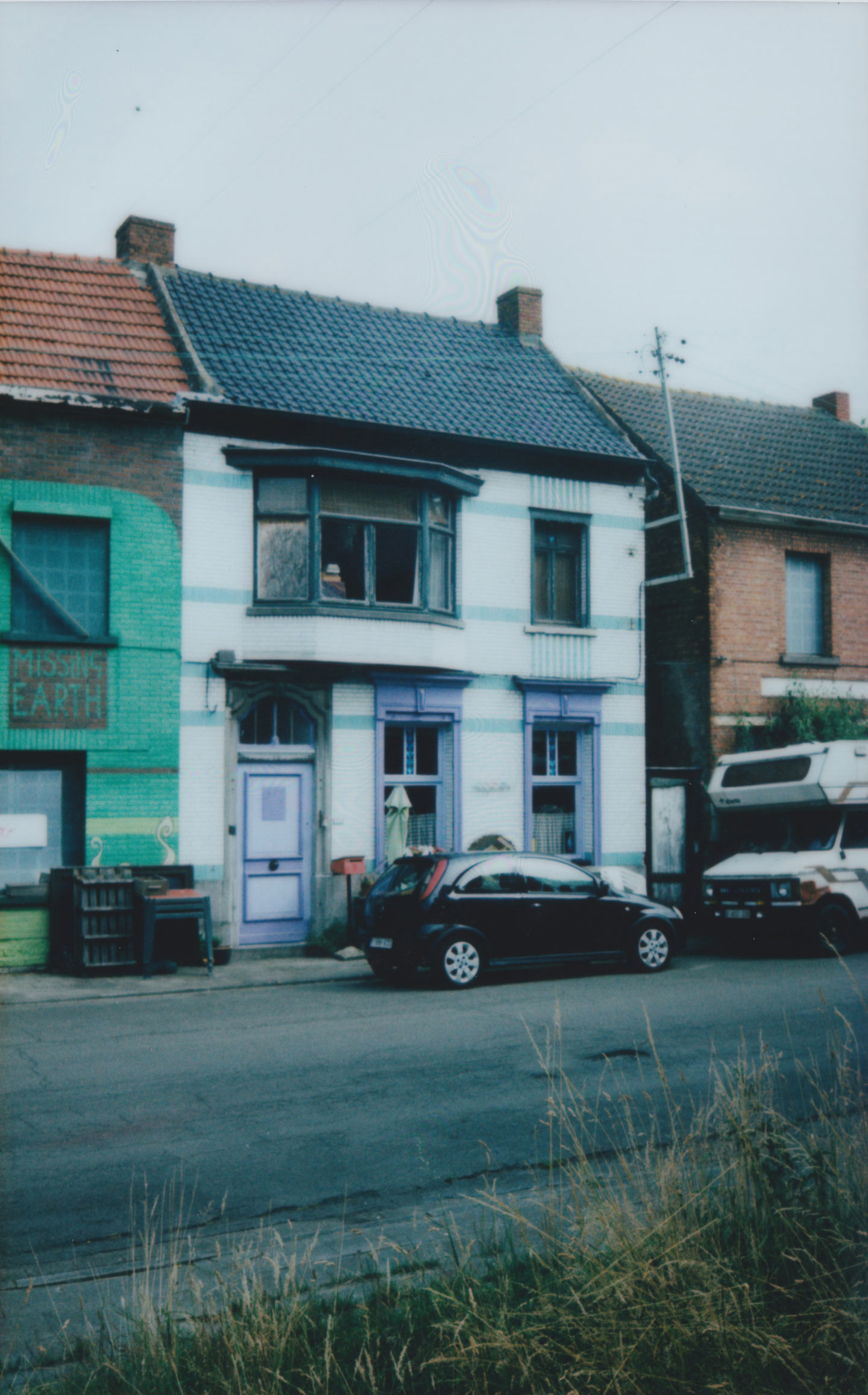
We were all working around this square and during that time I fell in love with this specific house. I asked if I could rent it, but I had to wait six months just to hear that it wasn’t possible because it was supposedly uninhabitable. It was around that period that the first squatters were arriving, in 2003. Yet it was some of the original villagers, whom I’ve got to know very well, that convinced me to squat the house. They said I should be the one to take it or someone else would beat me to it. So I squatted it. Which wasn’t really my intention, but another six months later and I was fully moved in.
Who else was squatting in Doel during that time?
The guys from Time Circus, an artist collective, they squatted the Boerenhof for a while, but you wouldn’t see them out much. They were hard workers, always busy on their next project, with a different one each year. Very interesting group of people. They now have their base in Antwerp, at Bar Paniek, but they travel all around Europe with their company in a self made wagon, hosting community and children focused projects each time they land in an area. Fascinating.
We’re standing at a crossroads near your house, it has very specific decorations, can you tell us something about those?
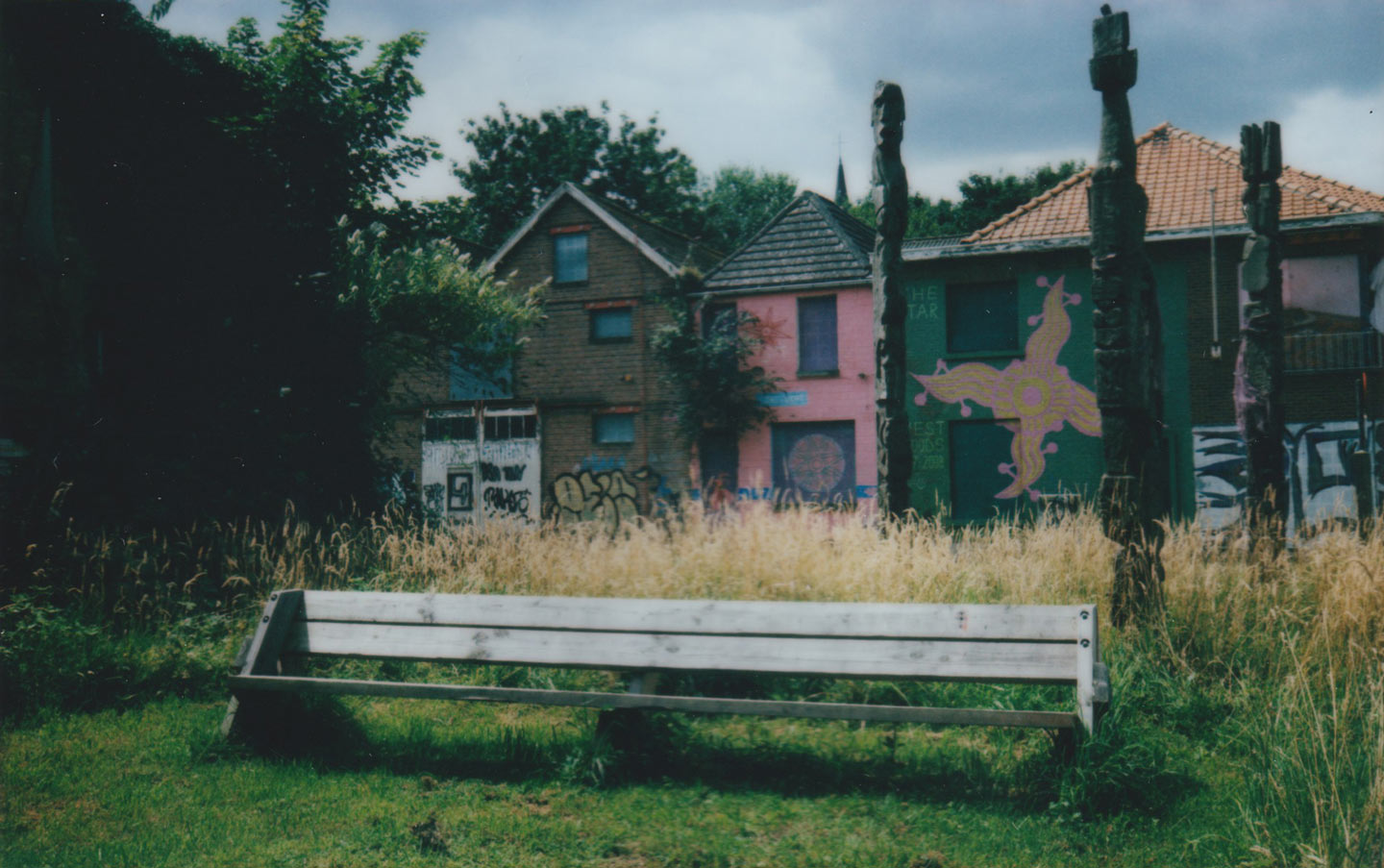
These murals came a bit later and were done by a dear friend of mine whom I’ve known for some years, artist Randell Sarneel. He’s interested in crop circles and their meaning, mainly visiting the United Kingdom and the Netherlands to study them. At the time he was writing a book about them and wanted to visualise some of the circles, while also adding a touch of color to the grim atmosphere of the village. The other graffiti artists have clearly respected the murals, they’re still in great shape, after all this time.
When were they done?
In between 2009 and 2012, I believe.
And what about the totems? They take a very prominent place here at the crossroads.
They were also done around the same period, by different sculptors in collaboration with Ruigoord, and symbolise cultural free havens. Ruigoord, whom I brought to Doel after I took our group on a field trip over there, is a free haven near Amsterdam and is the oldest free haven of the Netherlands, having turned 50 this year. Together we squatted the parish house, which was dubbed the Ruigoord Consulate and we had a consulate for Doel at Ruigoord. Artist Aja Waalwijk then had an exhibition about how Ruigoord came to be, but shortly after, the municipality sprayed glue in the locks so we couldn’t get in anymore.
There’s three totems, one stands for Ruigoord, one for Christiania, in Denmark, and the last one is for Doel, in the hopes that Doel might’ve become a cultural free haven too. Sadly it never did.
Well, you never know.
That’s true, you never know!
Alright, thank you so much Sabine. Would it be fine if I took your portrait?
Of course, go ahead.
This interview was conducted in July of 2023. The wooden benches on Sabine’s crossroads were rotted on the inside. After Doel Festival 2023, they were in pretty bad shape. We used part of the Doel Fund, a percentage of our ticket sales which goes back to the village, to have Eco Deco copy the original design and install brand new ones, restoring Sabine's public front garden.