
In 2021, leading up to the first edition of Doel Festival, we wrote about Doel’s history, the story of Doel presented in a compact and clear way.
We felt it important that visitors knew where they were going, which village they would be welcomed in and what happened there in the past, how it garnered its current patina and scarred beauty.
Since then, five years have passed and the village has not been quiet. In 2020, after the Flemish Government approved the building of a new container tidal dock, that would still come close to the village, it became clear that Doel was no longer under threat of being demolished completely.
Later in 2022, a pact was made between a large group of stakeholders, including the original action groups that fought for Doel’s existence, the municipality of Beveren and different heritage organisations, to fully develop Doel into a liveable town once again, tucked away in between a nuclear power plant, a natural reserve and the harbour of Antwerp.

In those five years, Doel has started to shape shift a little more each year. It may have begun with De Molen, a dike side restaurant built against a 17th century old mill, classified as a monument building. A classic “brasserie” which held up for 25 years, the exact period for which Doel was thought to be lost, even though De Molen saw a fully booked house throughout, thanks to locals and day tourists.
Unfortunately, in 2022 the iconic brasserie was forced to close, after it was decided that a new and modern restaurant building was to replace the old, by the municipality of Beveren and Maatschappij Linkerscheldeoever (MLSO, which owns most of the buildings in Doel, including the mill), yet Dienst Onroerend Erfgoed (a heritage organisation) abrupted those plans to protect the mill. The result: De Molen is now closed indefinitely.
Although an agreement was made in 2024 to move the mill up on to the dike, away from the new restaurant building, while still waiting for additional research to see if this is even possible. In the meantime, the old restaurant building functions as an information point for Grenspark Groot Saefthinge.


After De Molen, Doel’s last remaining café was next. Doel 5, a family owned bar originally erected in 1988 and named after the pressurised water reactors of the nuclear power plant, reactors 1, 2, 3 and 4, the café being the comical fifth. From mother to daughter, the café offered freshly tapped beers and bar food for workers of the plant, the harbour and the fewer and fewer residents of Doel, as well as groups of bikers and cyclists passing by on sunny days during the café’s latter years. Doel 5 unfortunately never financially recovered from the lack of clientele during the corona period and in 2023 the towel was thrown after 35 years of long hard work.
Then in the summer of 2024, renovations started on the marina, another decision made after it was certain that Doel was going to stay, due to years of underdevelopment of the small dock. The marina walls are being reinforced and dredging will ensure for larger boats to be able to pass and dock. Due to be ready in late 2026, meanwhile a temporary entrance route was constructed to still reach the marine club house, De Spuikom, now the very last place where you can have lunch or dinner in Doel, only open in the weekends.
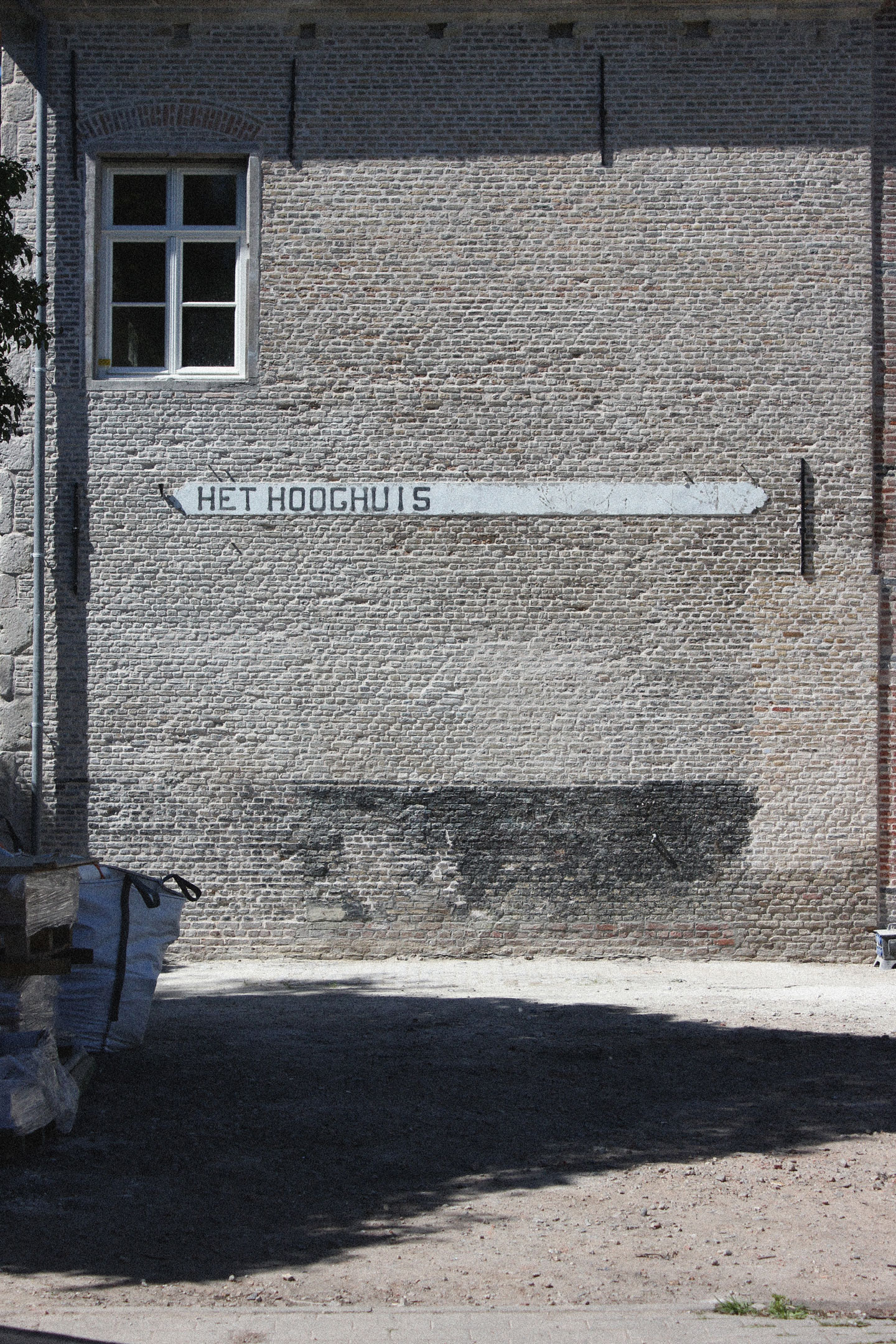
One project that is nearing its completion is the renovation of the 17th century monumental Hooghuis, a symbol for the combativeness of Doel, an amalgamation of architectural and design elements from the distant past, ever since Herita started in 2023, literally saving the building from collapsing. By the end of 2026, the Hooghuis should have a temporary occupation, in waiting to see how Doel develops along the years, to play into the future needs of the village.

And in 2024, the Flemish Government started renovations on a couple of houses already, with one test case in the Koggestraat having been finished in 2025. A corner town house with a garden, which had swiftly found a family who were attracted by the cheap rental price, afterwards admitting it feels strange to live in a “ghost town” hoping for Doel to become a “normal village” soon.

Meanwhile in preparation of Doel’s urban development plan, the latest visible change have been the cutting down of large patches of greenery, trees, bushes and shrubs which had been preventing the study of the current state of certain houses and buildings, as needed in order to see which houses can be renovated or not.
This cleared some pathways which were previously impassable, now allowing you to discover new parts of the village, yet this came at a cost, with the green waste being dumped in large stacks next to the road, providing more shelter for an already problematic rat infestation, and the newly visible houses haven’t yet been boarded up properly, which sparked a new wave of urban exploration and unwanted nightly visitors. Doel has been in this state for over two months at the time of writing.


But make no mistake, the master plan for Doel is here, finalised in August of 2025, it aims to provide the groundwork for slow urbanisation. The Werkgroep Doel (Work Group Doel) has worked six long years to make it, a group including 19 stakeholders — which we’ll list below — sat at the drawing table to pan out how Doel can be made sustainable, while the harbour comes closer to their doorstep. Under an agreement of ‘good neighbours’, the battle axe has been buried. The action groups who previously went against the decisions of the government regarding Doel and any form of harbour expansion plans, are now part of the framework of Doel’s future, realising that it will benefit the village if everyone works together.
The action groups who previously went against the decisions of the government regarding Doel and any form of harbour expansion plans, are now part of the framework of Doel’s future, realising that it will benefit the village if everyone works together.
So how does that future look? Doel will be the gateway to Grenspark Groot Saefthinge, a large natural reserve that sits on the border of Belgium and The Netherlands. Bordered by a huge natural buffer, a land dike 11 km’s long, that separates the new dock from the rest of the park, to shield both the village and the park from visual clutter and sound and light spillage. Additionally, this will allow the repair of many recreative and functional networks, for hiking, cycling, mountain biking and horse riding, with Doel lying at the strategic start- or endpoint of this natural buffer. The buffer will be built alongside the second tidal dock, which is planned to take at least 10 years.

A strong building code will prevent the village from looking drastically different, with notion to retain a lot of green, existing architecture and the preservation of its monuments, and the municipality of Beveren is currently working on a ‘visual quality’ plan and framework that takes in accountancy it’s 17th century character, all the way to it’s 1990’s architecture and even some of the graffiti.
We can now imagine a new Doel. The plan covers the renovation and building of houses, more than a 120 of them. These need their sewage checked and renovated, all electricity and water supplies redone, streets broken up, laid anew and internet installed. This for a calculated maximum inhabitant count of 288 inhabitants and an estimate of 500 tourists allowed per day to visit its cultural landmarks and enjoy the surrounding park reserve.


As stated in the plan, Doel’s final form will come to fruition only after multiple decades. And it doesn’t come without its caveats. Some of the residents will lose their current home, these are scheduled for demolition as they do not fall within the smaller perimeter. The village will be a continuous construction site for many years. It will be hard to open a shop or bar in those first years and keep it running consistently. And due to the harbour expansion coming so close to the village, producing and handling harmful materials and chemicals, it won’t be allowed to open a daycare or children’s school, nor will it be allowed to host any type of event or event location involving a large number of people coming together, during the day and especially at night. This means, albeit far away, Doel definitely has a future, but Doel Festival sadly has not.
At least not in Doel.
For now, we are looking forward to our 2026 edition and are already looking for a 2027 date.
Sources for this journal entry are Flemish news platforms VRT and TV OOST, news pages from the involved stakeholders, the master plan Toekomstperspectief Doel and in person conversations with Doel’s residents.
The stakeholders of Toekomstperspectief Doel (Future Perspectives for Doel) are Gemeente Beveren-Kruibeke-Zwijndrecht, De Vlaamse Waterweg, Erfgoedgemeenschap Doel & Polder, K.U. Leuven, Maatschappij Linkerscheldeoever, Vlaamse Overheid, Departement Mobiliteit en Openbare Werken, Agentschap Onroerend Erfgoed, Grenspark Groot Saefthinge, De Derde Generatie, Wonen in Vlaanderen, Port of Antwerp-Bruges, Alfaport VOKA, Herita, Doelland, Doel 2020, Departement Omgeving, Landschaps- en Stedenbouwbureau Omgeving en Experten and the inhabitants of Doel.
The complete master plan Toekomstperspectief Doel (Future Perspectives for Doel), which provides a perspective for Doel’s future, is available for download here.

