Fast and Furious
On 31 August 2024, Doel becomes the scene of the Speed and the Fury. We’ve already signed off for the Sound. It’s the last day of this summer month, and it’ll be one last round of happiness. We say « make the rounds » to gather, walk, and dance with summer and all its sensations that return every year. August 31 is therefore a rendezvous with time. The city is always moving forward: by September, our eyes are riveted on the clock, once again. We have to move furiously fast in the other direction, delay the end of summer, make it last. That’s the starting image, playing speed against speed, going against the flow of time, slowing down the unstoppable « progress », letting summer run.
Because as the speed increases, the distance between us contracts. Three hours by plane from Brussels to Athens, eight hours from Paris to New York. It’s a well-known fact that spaces contract as we go faster. Antwerp is the great hub of European trade, whose rapid expansion engulfs everything. So, what do we do with all these economic choices and what they’ve already made of us? Our spaces have been contracted, we’ve been outpaced by contracts, so the question is: how can we come together and contract something different? How can we contract without giving birth to worlds we wouldn’t want?
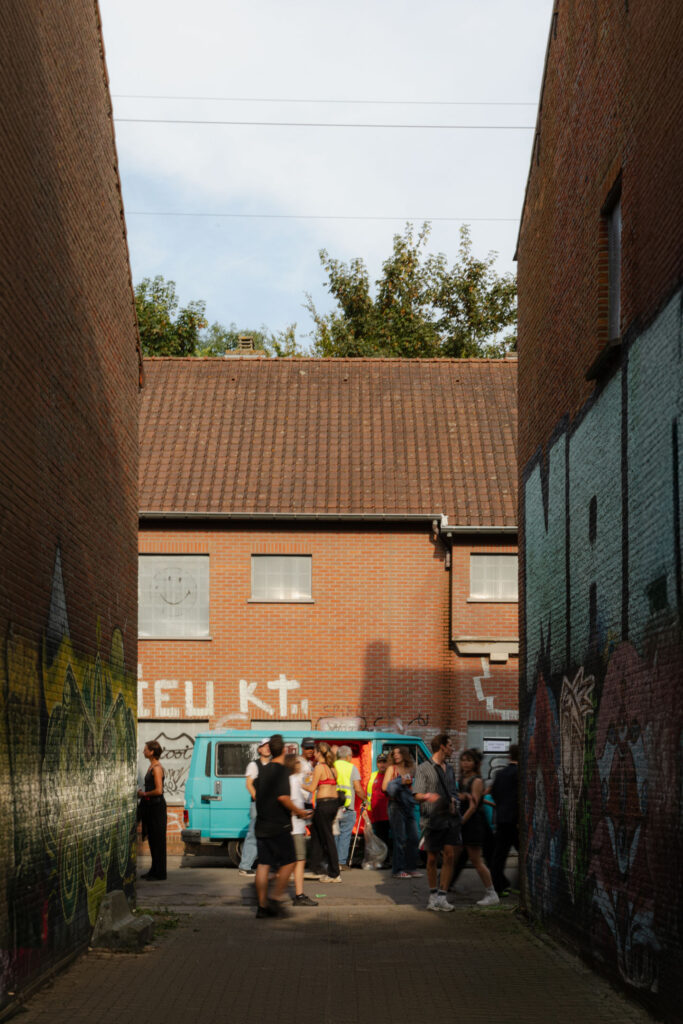
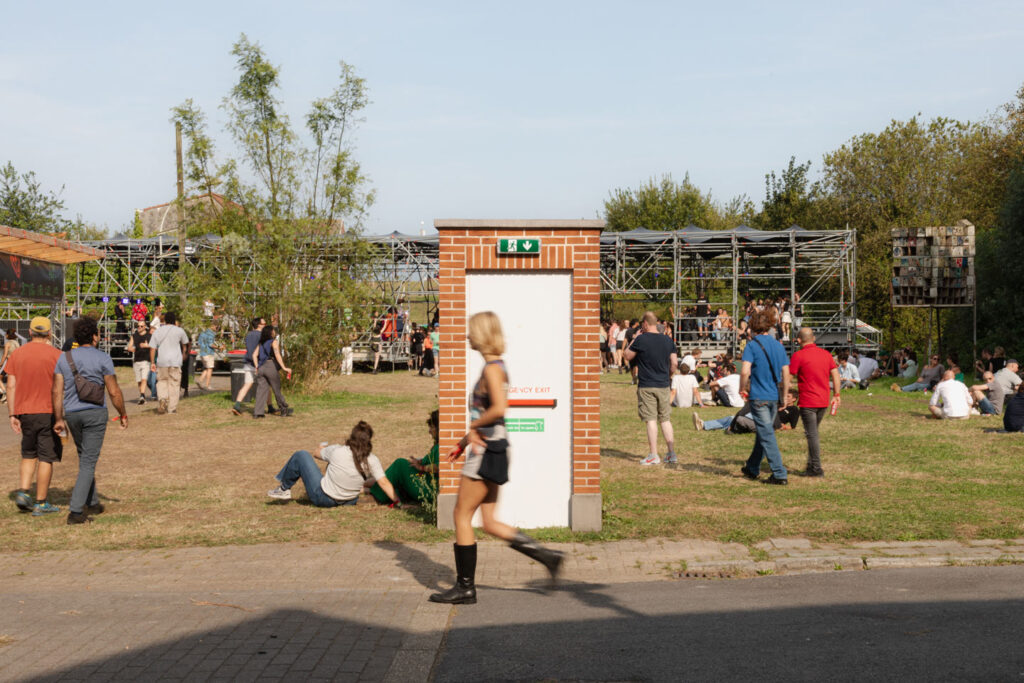
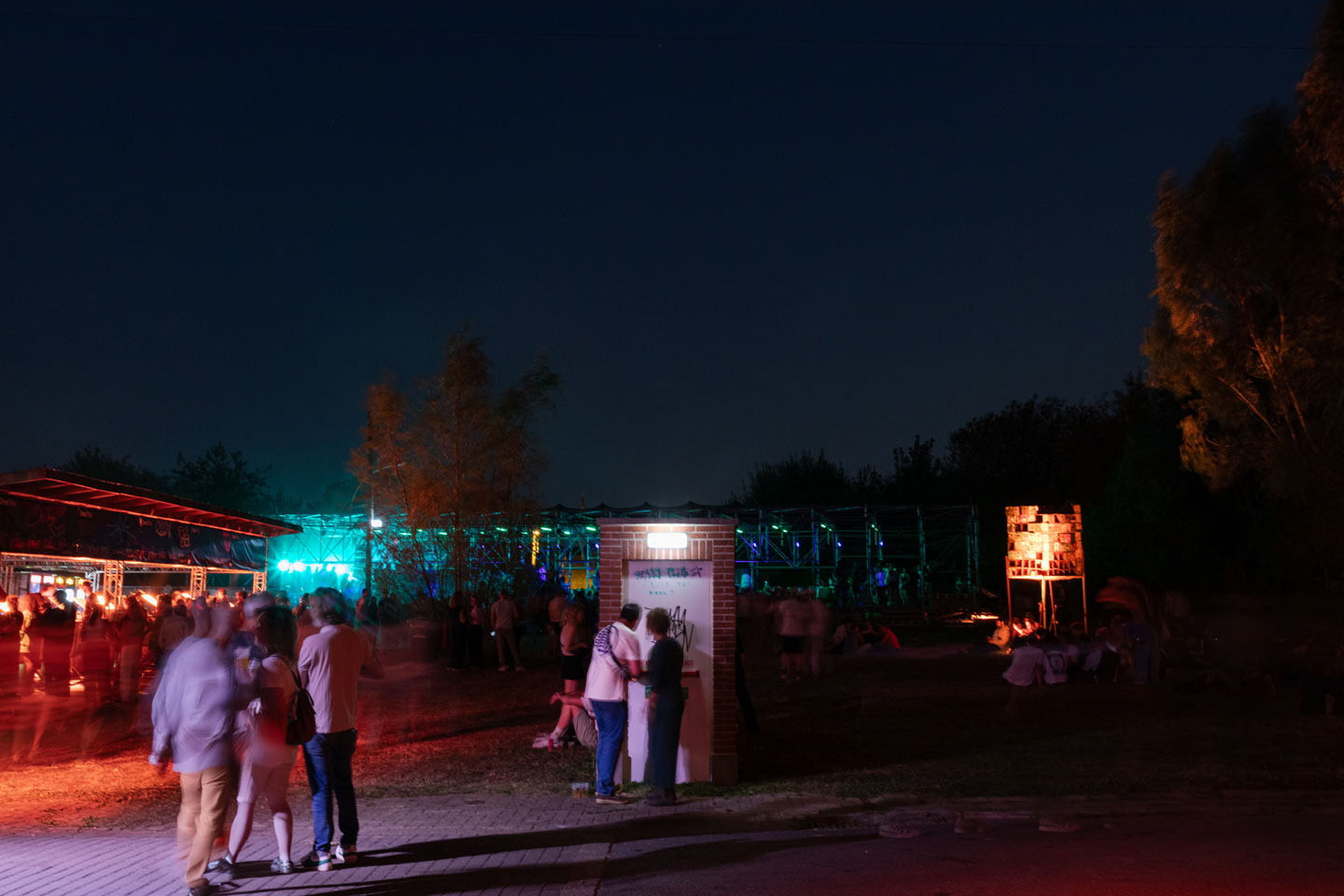
The round begins with « Cul-de-Sac » in which Nicolas Momein, who reuses utilitarian objects, finds a new sense of desire in a van, somewhere between a refuge and a cave. The work is aptly named after a blocked situation for which we need to furnish the impasse and rethink the path. Further on, in his « Emergency Exit For Daily Life » project, Willem De Haan seemingly proposes a way out of Doel by building a fake exit door that blends perfectly in its environment. As if it was always there. A striking reference to the many inhabitants who have chosen to leave their home behind.
We are indeed born preceded by all these speeds that stretch and propel us forward, and something must be done with these roadsides and dead-end paths. Brutalism, roaring objects, Xavier Mary belongs to that generation halfway between raves and road trips, a generation that imagines new fictions to live in the ruins of a past dream once called « progress ». With progress, there’s no question of slowing down; yet that’s exactly what we do in an effort to create a sense of duration. The festival isn’t merely about speed—it’s about learning to savor the time that remains. This remaining time can take on surprising forms. With his ectoplasmic steel sculptures, Walter Wathieu rebuilds the ruins of a future that have already settled among us, like traces of times yet to come. Time marches on—August 31st, almost September, a new beginning; it’s time to set off again, to get moving, or to recover from the motions of summer. Perhaps everything hinges on maintaining the fury, despite the speed.
Nicolas Momein
Cul-de-Sac
Cul-de-Sac, a creation by Nicolas Momein, is a mobile sculpture designed to engage with its surroundings and both visitors and passersby. It can be appreciated both day and night, thanks to its internal lighting powered by solar panels, giving it complete autonomy. What catches most people’s attention is the vivid color contrast of blue and orange. This bold chromatic opposition was absent in the first version, which was entirely white and destroyed in 2013. The colors, along with the shape of the vehicle, evoke a 70s aesthetic for some. The artist himself describes it as a balance between a utility van and a hippie van, aimed at achieving a certain neutrality. Some are drawn to the van’s inviting nature, while others are repelled by the organic feel of the interior. Momein deliberately provokes these conflicting reactions, creating a space that borders on both comfort and hostility. This ambiguity is partly due to the material used: rock wool, which can appear as soft as it is mineral.
After purchasing and restoring the van, Nicolas Momein lined the interior with wooden framing and mesh, onto which rock wool was sprayed. To further emphasize the idea of a cave, he added an arch linking the ceiling to the front wall, a “compromise between stalactite and stalagmite.” The material was then coated with construction spray paint.
The viewer is invited to ponder the concept of sculpture. With the door open, like the lid of a box, the negative space of the work is revealed. There is also the playful aspect of speculating on the title: the van suggests a journey, sometimes leading to a dead end; in this context, the “cul-de-sac” becomes a refuge.
Willem de Haan
Emergency Exit For Daily Life
Passers-by are given the suggestion they have the option to flee from their daily life, in case of emergency.
Willem De Haan challenges and undermines the socially conditioned and politically determined rules of everyday locations. By adding artificial elements in a convincing yet uncanny manner his works exert direct influence on daily situations. These suggestive sculptural interventions reference the influence of props on fictional scenarios in film and theatre.
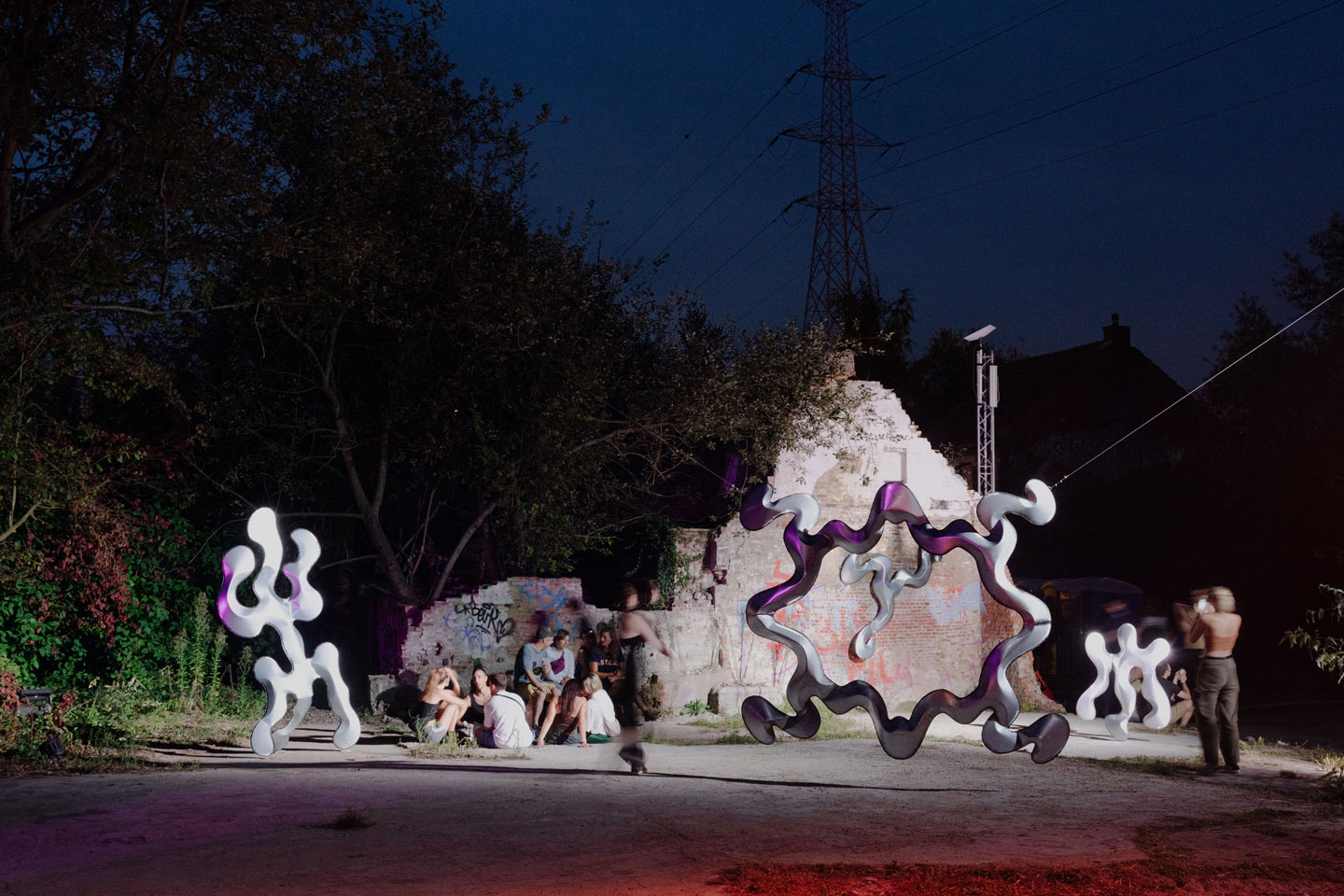
Walter Wathieu
Walter Wathieu unveils a series of sculptures he refers to as ectoplasmic. Constructed from cold, rigid metal, these works twist and contort into organic, almost spectral shapes. They conjure images of entities from another dimension, straddling the line between remnants of an industrial past and fragments of a speculative future. These forms are at once familiar and disconcerting, seeming to emerge from the earth as if they have always been part of the landscape.
Xavier Mary
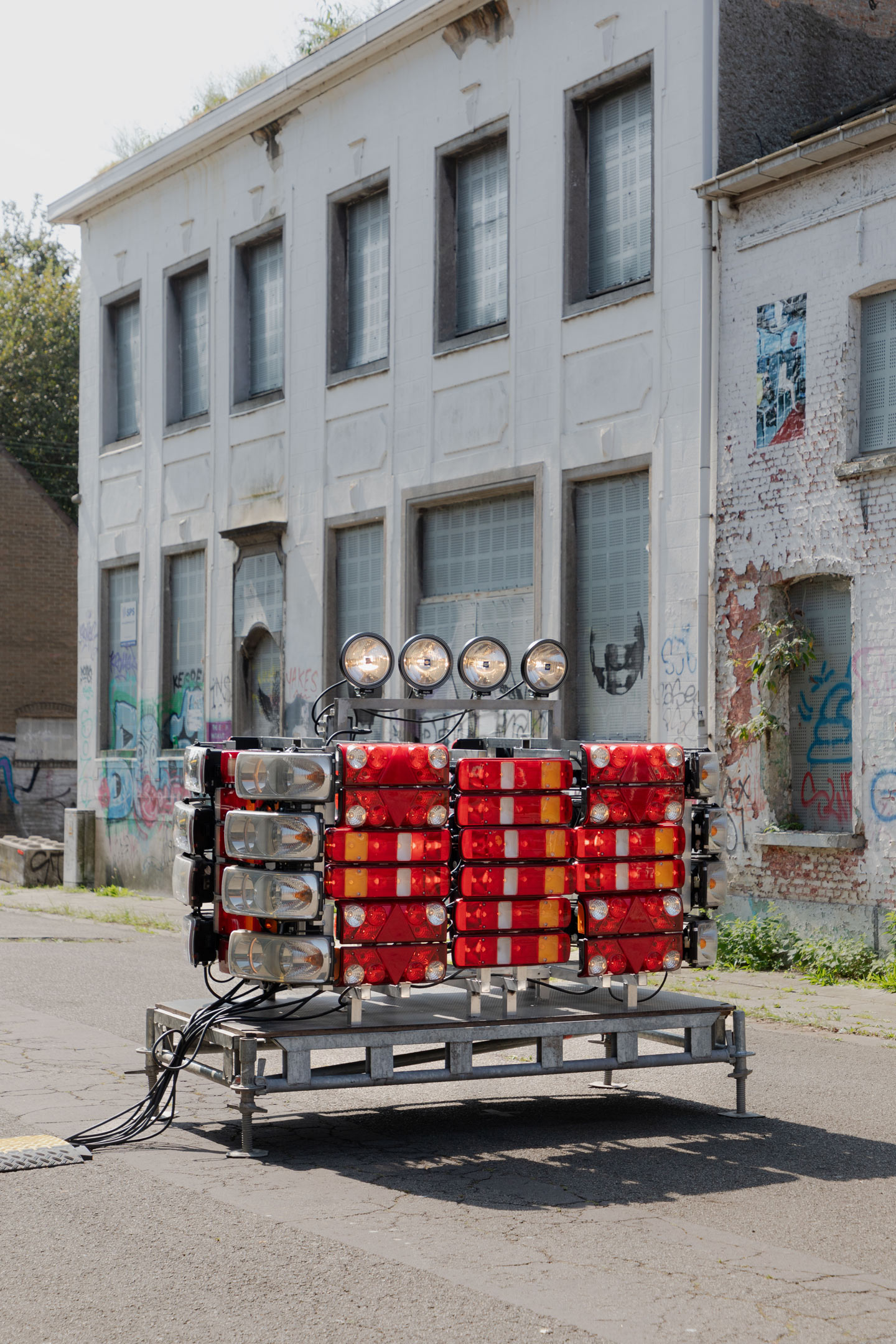
Too Many Parties
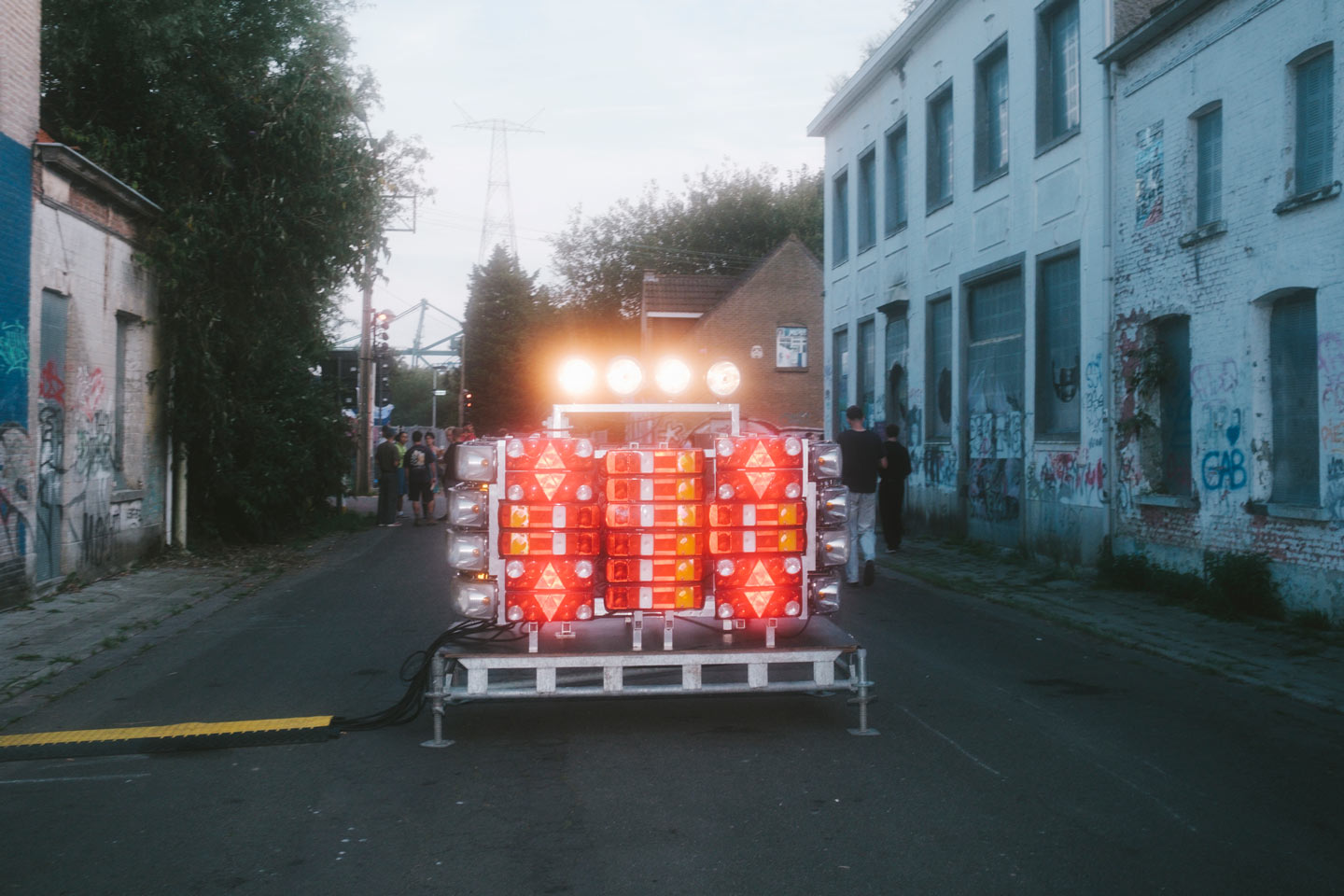
Too Many Parties, conceived by Xavier Mary in 2017, emerges as a commanding and visually captivating sculpture that melds contemporary materials into a strikingly monumental form. Crafted from aluminium, truck headlights, Hella halogen training lamps, and neoprene cables, this work is a symphony of industrial elements brought to life through a sophisticated lighting system.
The sculpture’s form evokes the powerful presence of a massive engine block, intricately assembled from a collage of vehicle lighting bulbs. Its illumination is orchestrated by a variable programming that choreographs the intervals and sequences of the headlights, resembling a dynamic nightclub light show. This rhythmic dance of light and shadow conjures the essence of an exuberant, subcultural nightlife, creating a dramatic interplay between brilliance and obscurity.
Fast and Furious was curated by Zoé van den Boogaerde.
Exhibition text written by Noé Gross.
Thanks to the support of Pizza Gallery, Ceysson & Bénétière, Space Collection and
Collection Uhoda, without whom Fast and Furious would not be possible.